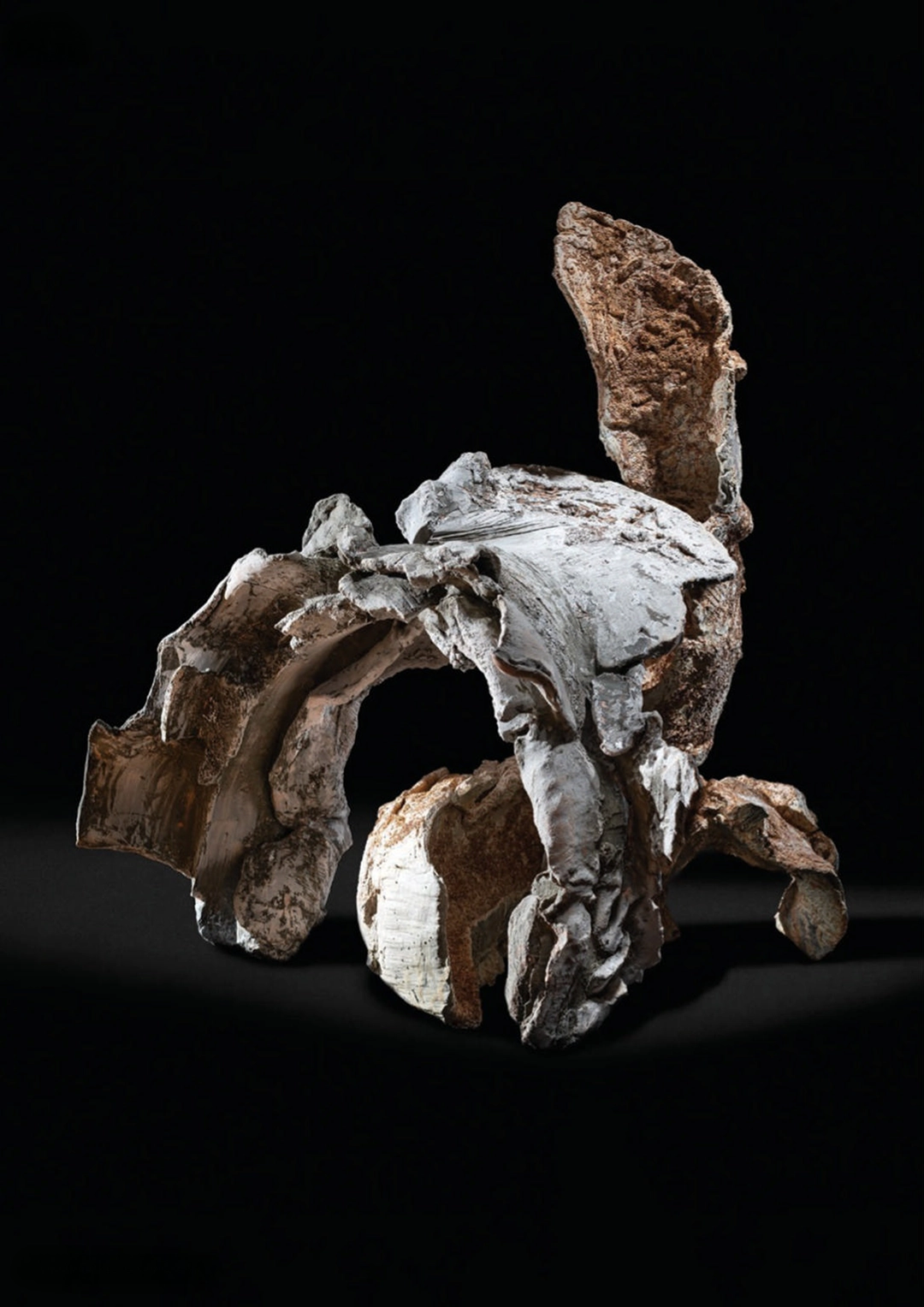
Mother and Child, Ray Chen, 2019
Stoneware, earthenware | H 64.17 in × L 52.36 in × W 46.06 in
Identity is the way a person perceives and expresses themself. It is often said to take shape through an ongoing conversation with culture. For many women, that construction is closely tied to the family environment and to everyday life—perhaps as a search for recognition, communication, and belonging. That feminine voice should be understood as a complex, multidimensional experience, where family, educational, and generational identities overlap. It is a continuous process, not a structure that can be declared finished.
How gender identity is perceived affects the way women confront social norms and cultural expectations. When a culture assigns rigid roles—within the family, in childrearing, or in public participation—those norms can limit or condition how a woman relates to her community and to her own development. Family identity and gender identity intersect; from that intersection emerge values that are absorbed and transmitted across generations, often silently, yet with real effects on the education of those who receive them—children first, but not only them—and on social life at large.
Across history, even in contexts where women’s voices have been systematically repressed, female resilience has held families together and preserved cultural continuity. And yet gender stereotypes persist across different settings—East and West alike—often operating as veiled mechanisms of survival. Recognizing them and bringing them into view helps identify the barriers that slow their disappearance. It places us at the threshold of a more inclusive compatibility between cultural and social identity—one in which family identity and maternal identity can also take their place organically.
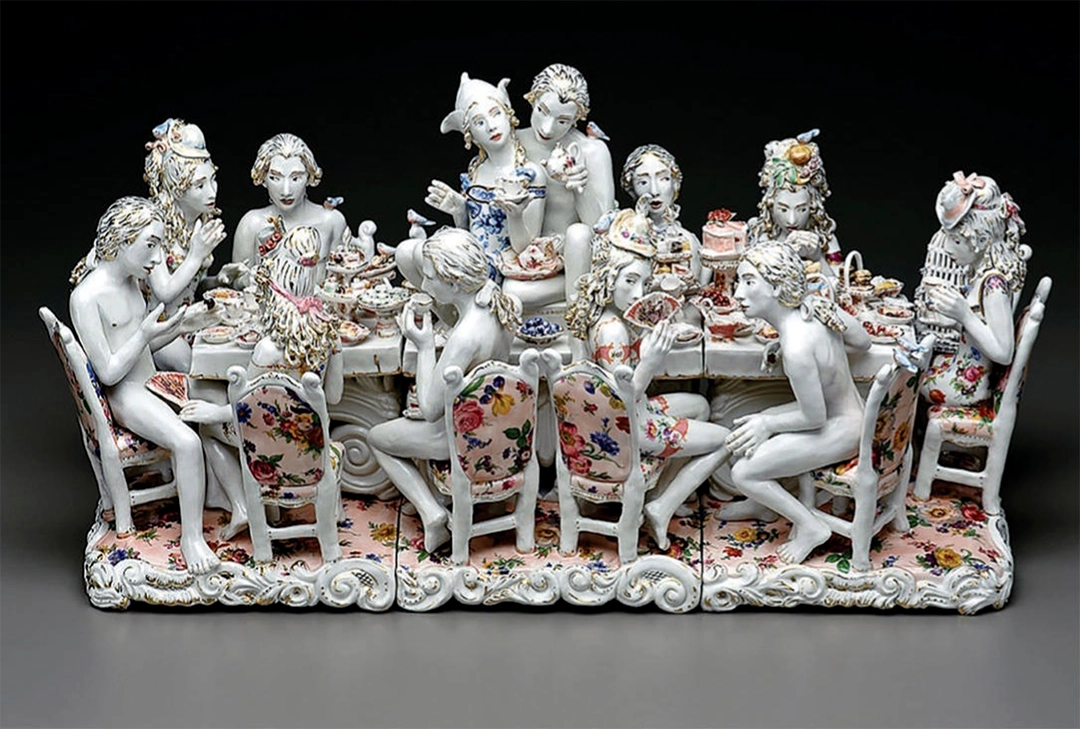
Battle of the Britches – The Tea Party, Chris Antemann, 2010
Porcelain, decals, luster, 14.57 × 33.07 × 14.17 in | Kamm Teapot Foundation Collection.
In ceramics, clay can function as a metaphor for the body, for care, or for domestic labor; what matters is not only the finished form. The work is built to sustain an idea, even if that requires breaking with the medium’s traditional uses.
Within contemporary art, feminism also seeks equality—and the impetus to make works that articulate experiences tied to gender identity and family identity, especially when no technique or material use can “represent” those experiences in a conventional way. Creativity allows the limitations of the medium—ceramics, in this case—to be exceeded; through practice, women can re-examine inherited ideas, activate cultural awareness, and reshape social understanding of their historical roles. In that sense, feminism in art is also a reflective process and a public challenge—not a flat, “gendered” aesthetic formula.
Family identity is formed through what is lived and learned at home. Many ideas and habits pass from one generation to the next, often through matrilineal transmission. Just as clay is worked—by hand, with care and a steady pulse—maternal love sustains that continuity and acts as an engine of care, vision, and aspiration, capable of giving life meaning and redefining each person’s place in society.
Generational contexts change; they stagnate, they flare up as well—reexamining the past and everyone’s roles. In recent years, and with full justice, spaces have opened for gendered voices to become audible—and, at times, inconvenient. That expansion, together with the coexistence of diverse identities, has begun— from within—to reconfigure social values (artistic ones included), enabling more complete readings of feminine identity and of the very idea of family. Art is not only a witness; it is an actor, and a leading one.
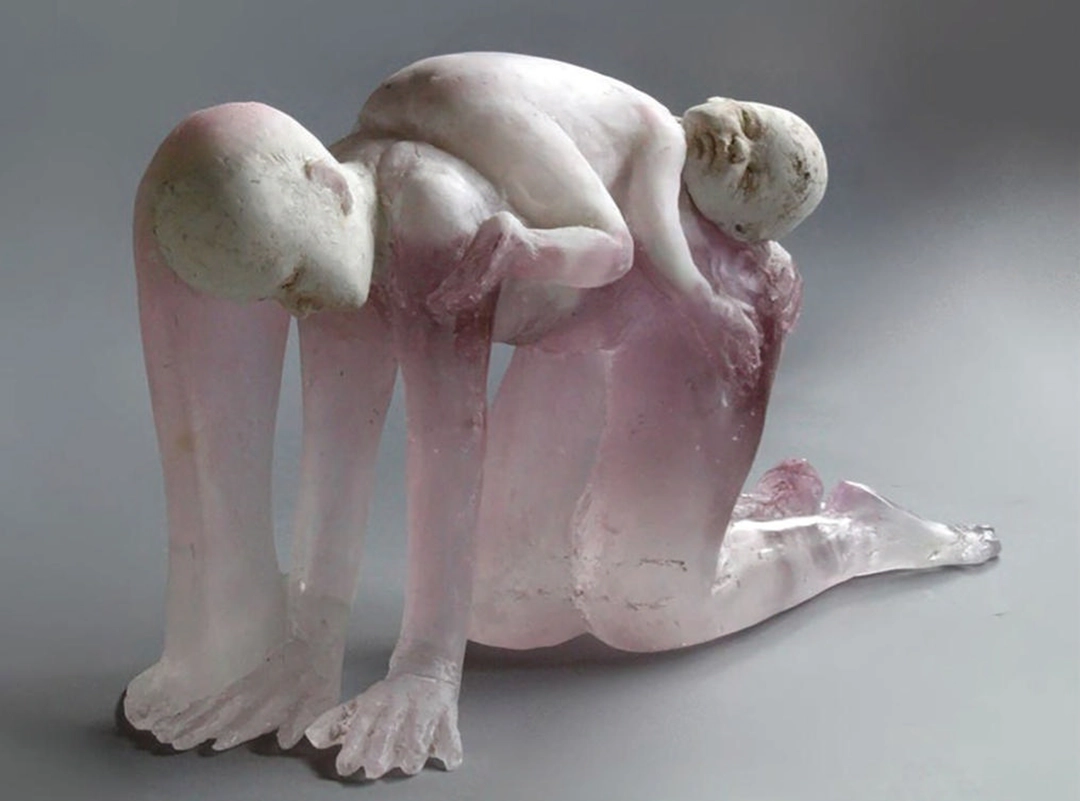
Mother and Child, Christina Bothwell, 2020
Cast glass, ceramic and oil paints |18.11 × 27.17 × 7.09 in.