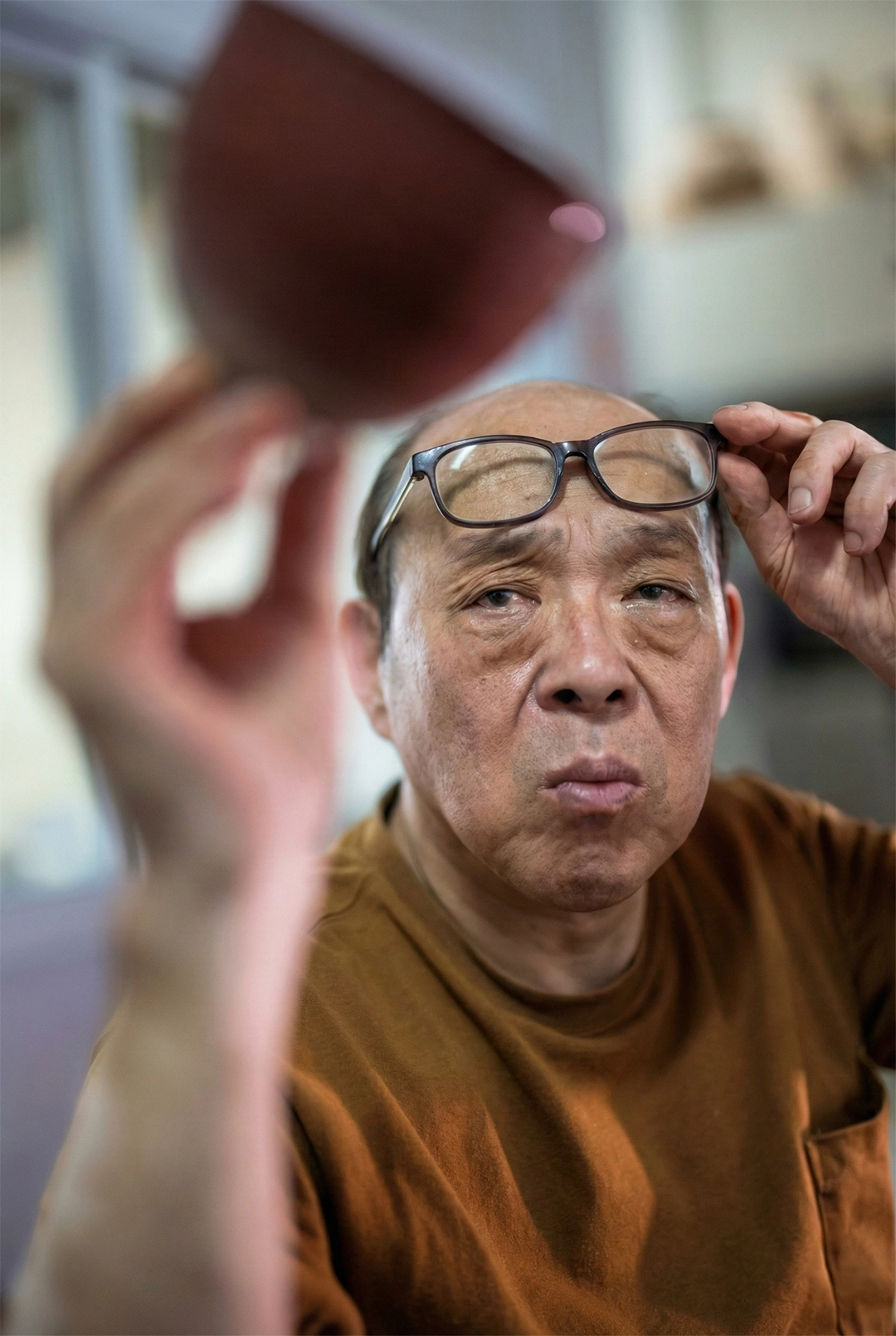
Inspecting a piece of pottery at Chin Jukan Kiln in Kagoshima, Japan.
Kazuteru Osako is Japanese by birth and upbringing, but in his professional life he works under a Korean name: Chin Jukan. The choice reflects his ancestry. His kiln still stands in the same village in southern Japan where Korean potters were settled roughly four centuries ago, during Japan’s invasion of Korea. Brought by a feudal lord seeking their advanced ceramic skills, those craftsmen established a lineage that has remained in the area for fifteen generations.
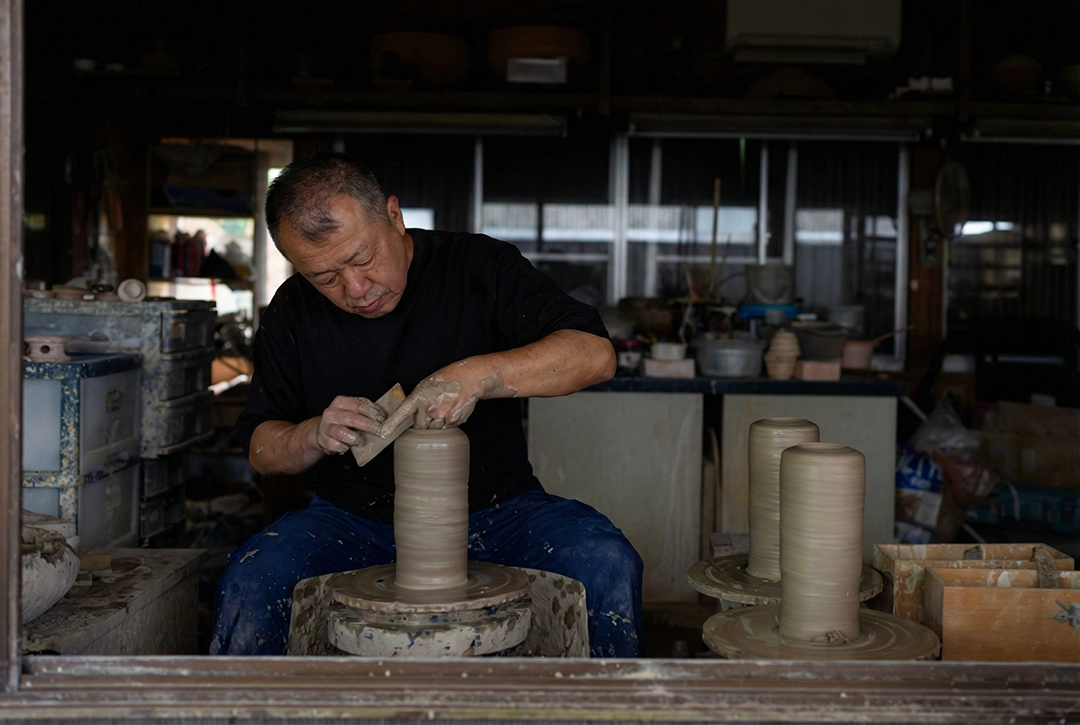
Accounts differ on whether the original potters came voluntarily or as captives. Mr. Osako believes his ancestors were forced to come, and he says that legacy continues to shape relations between Japan and Korea. “If I’m not fully Japanese, then what am I?” he said. “My history makes me something in between.” He did not grow up speaking Korean, studied ceramics in Italy, and later worked at a kiln in South Korea producing traditional kimchi jars.
Today, Mr. Osako is widely regarded as Japan’s leading practitioner of Satsuma ware, a ceramic tradition rooted in Korean techniques introduced by his ancestors. The village where he works is a recognized center of Satsuma pottery, named after the former designation of this region of Kyushu. His work is fired in a family kiln made of earth and brick that is more than a century old and still wood-fired twice a year.
Since taking over the family business in 1999, Mr. Osako has emphasized his heritage as a defining element of his work. The kiln complex includes Korean cultural markers, including a shrine and a gravestone honoring a Korean consul. The business, also called Chin Jukan, traces its name to a guild of Korean potters passed down through the family. His great-grandfather founded the company, whose ceramics were once exhibited at European world fairs and presented as gifts abroad.
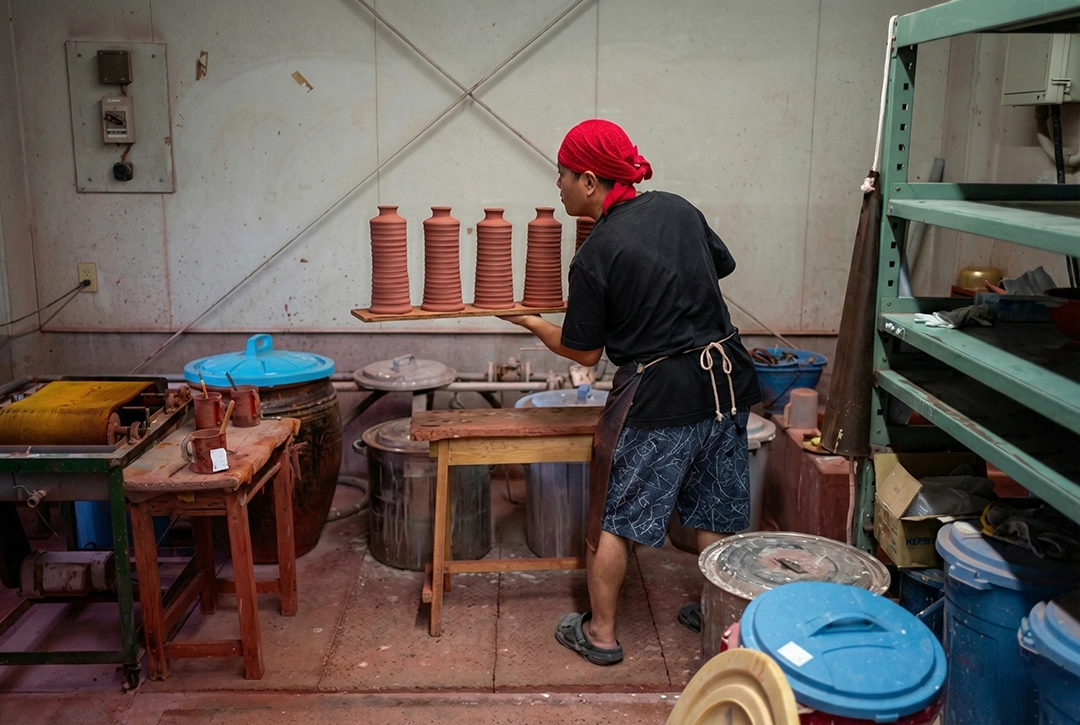
A potter's studio
This text is based on an article published by The New York Times International on December 23, 2025.